![Mpact Recycling Logo [logo]](/templates/mr20/images/logo-mpact-recycling.svg)
Recycling is a complex industry, but recycling at home doesn't have to be complex at all. You don't need encyclopedic knowledge of what can and can't be recycled, or even a shrine to waste management; with colour-coded bins for every type of packaging.
That kind of setup might be close to ideal, but it's also impractical, expensive and daunting to maintain. A "Good enough" system is a much easier one to live with and here's how to build one.
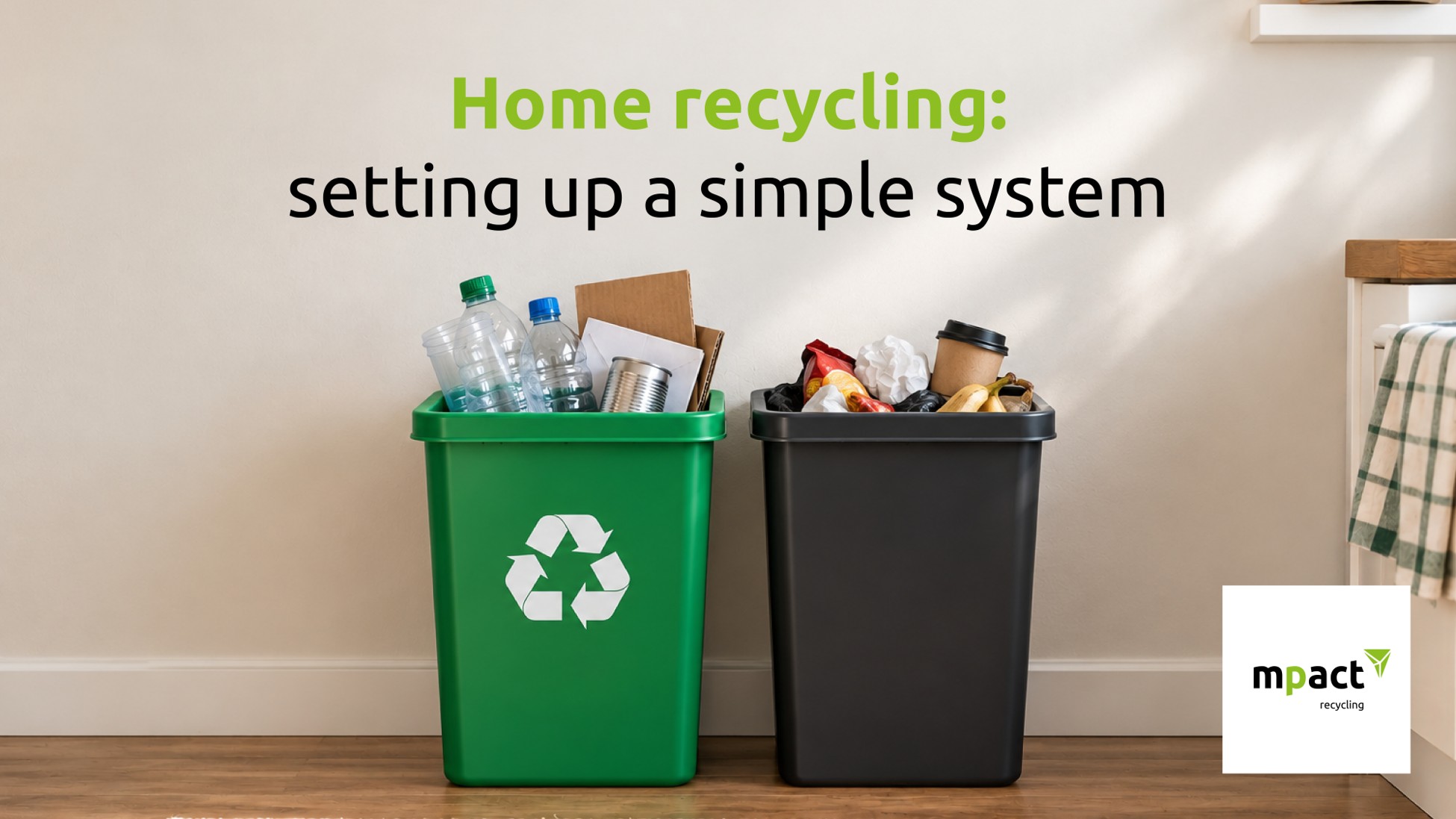
The easiest way to start recycling at home is to give your recyclables a spot of their own and separate from your general waste. This could be a second bin in the kitchen, a container in the cupboard under the sink, a bag in the pantry, or a larger container in the garage.
Having one place for recyclables also makes the habit easier to maintain. Instead of deciding what to do with each item as it comes up, you already know where it goes. It doesn't need to be elaborate, just pick a corner and start there.
If space is tight, a small bin or reusable bag is easier to store and empty often. If your household generates more recyclable packaging, a larger container in a garage, scullery or outdoor area might work better.
Strip away the lid and pedal, and a bin is really just a box. Before buying anything, check what you already have around the house.
A plastic wheely box, an old laundry basket or an old plastic tub works just as well. And will cost you nothing.
For a home recycling system, convenience trumps sophistication in most cases.
If your general waste bin sits in the kitchen but your recycling bin is at the other end of the property, down two flights of stairs and next to the dog’s kennel, recyclables are more likely to end up in the wrong place.
Position your recycling container close to where packaging is actually handled, usually somewhere in or near the kitchen. If you generate recycling elsewhere in the house too, keep a small container there and transfer the contents to your main bin once full.
Your recycling bin shouldn't double as another rubbish bin. Empty all containers of food and liquid before adding them.
They don't need to be spotless, just free of stuff that could contaminate other materials in your recycling bin. Furthermore, dry recyclables handle better, process easier and in the case of paper and cardboard, retain the value that waste collectors depend on.
Bear in mind that local collection or drop-off points may have different requirements for what’s brought in. As such, you may need to sort materials like paper, cardboard, plastic, cans and glass, before they're collected. Check what your service requires and set your system up accordingly.
You'll never need to memorise every type of recyclable packaging.
Keep a reference guide (like Mpact Recycling’s Waste Classification Guide) somewhere visible, like on the fridge or near your recycling bin, so that the answer is close at hand whenever anyone’s unsure about what they’re throwing away.
A home recycling setup doesn't need to be perfect from day one. The best system is usually the one that fits your habits, your lifestyle and, of course, your budget. Practical, not elaborate.
Start with a dedicated space for your recyclables. Put it somewhere convenient. Keep what goes in it empty, clean and dry. Learn what your local collection service or closest drop-off centre accepts, and everything else will fall into place.
As you produce more recycling, or get more comfortable sorting materials, you can add tweak and edit as necessary. The goal is to achieve the system simple enough that you and your family will use it every day.
Sorted.
Not sure what belongs in your recycling bin? Download Mpact Recycling's Waste Classification Guide and keep it close to your recycling area.
COOKIES: This site uses cookies to enhance your website experience. See our cookie policy for further details.